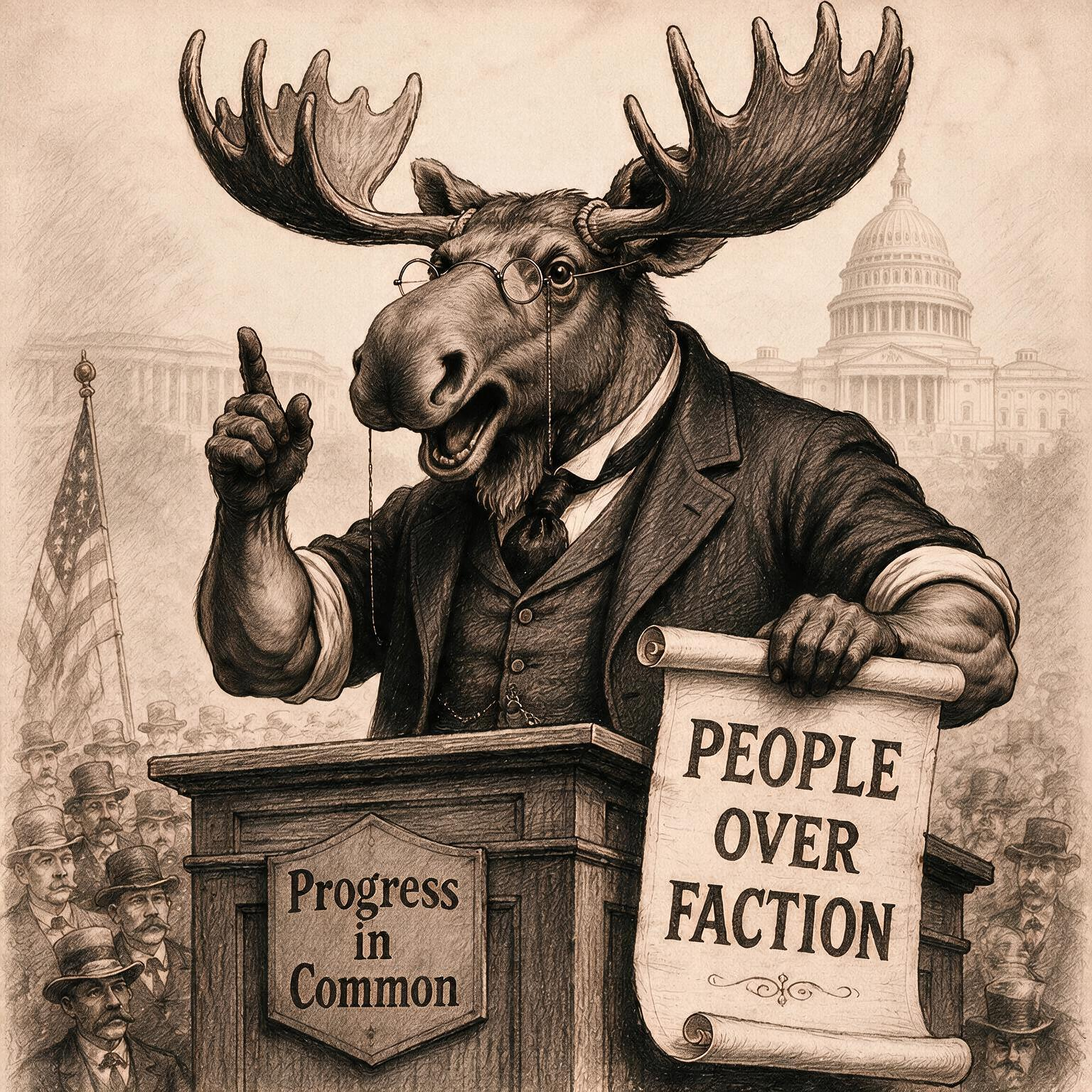
Foundations of Courage
Two Paths, One Enduring Standard
Two men with vastly different temperaments and political fortunes proved that transformational leadership comes from elevating people over faction.
Abraham Lincoln
16th President (1861–1865) • RepublicanLincoln was barely popular enough to win the presidency in 1860, securing less than 40% of the popular vote and relying on a fractured opposition. Yet under the crucible of war, he executed the greatest moral and economic intervention in American history.
"Labor is prior to and independent of capital. Capital is only the fruit of labor... Labor is the superior of capital, and deserves much the higher consideration."
- Emancipation & 13th Amendment: Dismantled chattel slavery to establish fundamental human dignity.
- Homestead Act (1862): Distributed public lands directly to small family farmers, blocking corporate land monopolies.
- Land-Grant Colleges (1862): Democratized higher education for working-class citizens.
Theodore Roosevelt
26th President (1901–1909) • Republican / Bull MooseArguably the most popular politician of his generation, Roosevelt wielded his immense popularity to take on entrenched corporate trusts, protect consumer health, and preserve millions of acres of wild America. When party bosses rebelled, he launched a third-party movement to keep the fight alive.
"We demand that big business give the people a square deal; in return we must insist that when any one people do an injustice, they too must be held to account."
- The Square Deal: Broke up monopolies and enforced federal food and drug safety standards.
- Conservation: Permanently protected 230 million acres of forests, parks, and monuments.
- Labor Defense: First president to intervene in a strike to protect the public and working miners.
Visual Evaluation Dashboard
The Common Progress Index (CPI)
Evaluate any public figure across the 5 pillars of American reform (out of 100 points) based strictly on documented policy actions and institutional legacy.
Popular examples:
Theodore Roosevelt •
Abraham Lincoln •
John McCain •
Jimmy Carter •
Richard Nixon •
Donald Trump •
Joe Biden
Evaluating historical record and rendering visual chart...
Major Reform Leader
Leader Name
85
/ 100
Summary of policy accomplishments and historical record.
5-Pillar Balance Profile
The Blueprint
Four Principles of True Progress
The enduring pillars that distinguish transformative statesmanship from short-term factional politics.
01
People Over Faction
Prioritizing broad public welfare over corporate trusts, party bosses, and donor orthodoxy.
02
A Fair Chance in Life
Ensuring that every citizen has equal dignity, worker protections, and access to opportunity.
03
Public Stewardship
Preserving national resources, wild public lands, and democratic institutions for future generations.
04
Moral Courage in Crisis
Willingness to take political risks and enact necessary structural reforms despite partisan resistance.
Historical Index
Leaders Across the Spectrum
Examining the concrete legislative and governance records of figures who advanced the American republic.
Abraham Lincoln
16th President (1861–1865)
Preservation of the Union & Universal Human Dignity
Elevated the moral foundation of the republic by ending chattel slavery while advancing economic opportunity through the Homestead and Land-Grant College acts.
- Emancipation Proclamation & 13th Amendment
- Homestead Act of 1862
- Morrill Land-Grant College Act
Theodore Roosevelt
26th President (1901–1909)
The Square Deal & Public Conservation
Challenged corporate trusts, established consumer safety standards, protected 230 million acres of public land, and launched the 1912 Bull Moose revolt.
- Broke Northern Securities railroad trust
- Pure Food & Drug and Meat Inspection Acts (1906)
- Protected 230 million acres of forests and national parks
Robert M. La Follette
U.S. Senator & Governor (1901–1925)
The Wisconsin Idea & Direct Democracy
Architect of progressive state governance; pioneered direct primary elections, workers' compensation, tax reform, and aggressive corporate regulation.
- Pioneered direct primary elections in Wisconsin
- Established civil service reform & worker safety laws
- Key leader of 1924 Progressive presidential ticket
Join The Common Ground
"It has never been about the party. It has always been about the people." — The Progress in Common Standard